

How to get from JFK to Manhattan by subway is simple: board the AirTrain from your terminal to Jamaica Station, then transfer to the Manhattan-bound E train at Sutphin Blvd-Archer Av. Total cost is $11.75 ($8.75 AirTrain + $3.00 subway), taking roughly 60 to 75 minutes.
| Detail | Info |
|---|---|
| Total Fare | $11.75 (AirTrain $8.75 + subway $3.00) |
| Total Travel Time | 65–90 minutes, gate to Midtown |
| Transfer Point | Jamaica Station (AirTrain to subway) |
| Subway Line | E train (Manhattan-bound) |
| Best For | Times Square, Penn Station, World Trade Center |
| Payment | OMNY tap (credit/debit card, phone, smartwatch) |
This route is the cheapest way into the city from JFK, full stop. It’s not the fastest option on the board, but if you’re traveling light and watching your budget, it beats a $70+ taxi or rideshare every time.
Why the Subway Beats Every Other Option on Price
A cab from JFK to Midtown runs a flat rate of $70 plus tolls and tip, which can push the total past $90. Rideshare pricing fluctuates with surge demand and can land anywhere from $55 to $100 during peak hours.
The subway route costs $11.75 total. That’s the AirTrain fare of $8.75 plus a standard $3.00 subway swipe on OMNY. Compare that to the Long Island Rail Road option out of the same station, which runs $14 to $16 depending on peak or off-peak timing.
For a solo traveler or anyone traveling on a budget, the math isn’t close. Where the subway loses ground is time and comfort with luggage, which we’ll get into below.
Step-by-Step: AirTrain to Subway Transfer at Jamaica
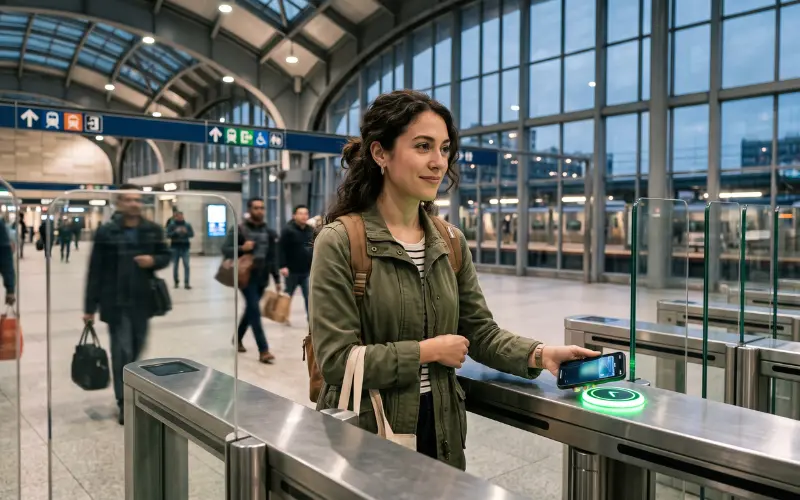
Here’s what actually happens once you land, broken down into the parts most guides skip.
Step 1: Find the AirTrain platform.
Every terminal at JFK (1, 2, 4, 5, 7, 8) has direct AirTrain access via signage marked “AirTrain.” Follow it from baggage claim; you won’t need to exit the building.
Step 2: Ride to Jamaica Station.
The AirTrain loops through all terminals before heading to Jamaica, so depending on which terminal you land at, the ride to Jamaica can take anywhere from 8 to 20 minutes.
Step 3: Tap out and pay the AirTrain fare.
You pay when you exit at Jamaica, not when you board. Tap a contactless credit or debit card, a smartphone wallet, or an OMNY card at the exit gate. Kids under 5 ride free.
Step 4: Follow signs down to street level.
Jamaica Station connects the AirTrain, LIRR, and subway, but they’re on different levels. Signage directs you toward “Subway” and eventually outside toward the Sutphin Blvd-Archer Av-JFK Airport station entrance.
Step 5: Tap into the subway with the same card.
OMNY reads your card again for the $3 subway fare; there’s no need for a separate MetroCard purchase.
Step 6: Board the Manhattan-bound E train.
Take the elevator or escalator down one more level to reach the platform.
Which Route Fits Which Destination (E Train, LIRR, or a Mixed Approach)
Most guides tell you “take the subway” and stop there. In reality, the right move depends heavily on where in Manhattan you’re headed and what time you’re traveling.
- If you’re going to Midtown West, Times Square, or Penn Station: the E train is your best call, full price included. It’s the only one-seat ride from Sutphin Blvd that lands you within walking distance of both areas, and there’s no reason to pay more for the LIRR on this route.
- If you’re going to Midtown East, Grand Central, or the UN area: skip the subway transfer entirely and take the LIRR from Jamaica instead. The E train doesn’t serve Grand Central, and you’d otherwise need a second subway transfer (usually to the 7 or the S shuttle) once you reach the west side, adding 15 to 20 minutes you don’t need to lose.
- If you’re traveling during evening or weekend hours: the E train sometimes runs local instead of express through Queens because of scheduled track work, which adds real time to the ride. Off-peak LIRR trains run less frequently too, so check real-time departures at Jamaica rather than assuming a train is waiting.
- If you’re headed to Downtown Brooklyn instead of Manhattan: neither of the above is ideal. The LIRR to Atlantic Terminal is actually the faster call here, since it avoids a Manhattan subway loop-back entirely.
Which Subway Stop to Get Off At
Once you’re on the E train, the stop you pick matters as much as the line itself:
- 42 St-Port Authority Bus Terminal: best for Times Square, the Theater District, and Hell’s Kitchen.
- 34 St-Penn Station: best for Penn Station, Madison Square Garden, Hudson Yards, and the Empire State Building.
- World Trade Center: best for the Financial District, the 9/11 Memorial, and Battery Park.
If your hotel is in Midtown East, near Grand Central, or in Brooklyn near Atlantic Terminal, use the LIRR route described above instead of forcing a subway transfer.
Real Travel Time: What the Schedule Doesn’t Tell You
MTA’s official page gives fares but skips the time math. Here’s a realistic breakdown for a trip from JFK to Midtown:
- AirTrain terminal to Jamaica: 8 to 20 minutes, depending on terminal and how many stops the train makes ahead of you.
- Wait for E train at Sutphin Blvd: typically 2 to 10 minutes depending on time of day.
- E train ride to 42nd Street: about 55 to 60 minutes under normal service.
Add it up and you’re looking at 65 to 90 minutes door to platform, not counting the walk from your subway stop to your final address. Late at night or during service changes, add another 10 to 15 minutes for waiting.
If you’re arriving during a busy travel weekend, it’s worth reading up on rush hour subway crowding before you land, since a packed E train with luggage is a different experience than an empty one.
Field-Tested Warnings Most Guides Skip
A few things that only become obvious once you’ve actually done this trip a handful of times:
Weekend track work is common on the E line
The MTA regularly reroutes or slows E trains on weekends for maintenance, sometimes sending them local through Queens instead of express. Check the MTA app or posted service alerts before you commit to this route on a Saturday or Sunday.
The AirTrain fare gate only takes contactless payment, and it can jam
If your card is worn or your phone’s NFC is acting up, you’ll hold up the line behind you. Carry a backup contactless card if you’re relying on your phone alone, especially after a long flight when battery is low.
Jamaica Station at night feels different than Jamaica Station at 2pm
It’s a legitimate, heavily used transit hub and generally safe, but overnight arrivals should stick to well-lit main corridors and avoid wandering into side exits while hauling luggage. If you land after midnight and have more than one bag, a rideshare for that last stretch is a reasonable call even if you took transit the rest of the way.
Luggage and Accessibility: What Nobody Mentions
Jamaica Station and every station on this route are ADA accessible, with elevators connecting the AirTrain, LIRR, and subway levels. That matters if you’re traveling with a wheelchair, a stroller, or simply can’t manage stairs with heavy bags.
That said, “accessible” doesn’t mean “spacious.” Elevators at busy transfer points can have short waits during peak arrival windows, especially when multiple international flights land close together. If you have more than one large checked bag per person, budget extra time for navigating turnstiles and train doors, which aren’t built with luggage racks in mind.
Overnight travelers should also know the E train runs a modified late-night schedule with fewer trains per hour, and some late-night AirTrain waits stretch past 15 minutes.
Paying Your Fare: OMNY vs. MetroCard
The MTA has largely phased toward OMNY, and it’s the simplest way to handle this trip. Tap any contactless card or phone at both the AirTrain exit gate and the subway turnstile. No app download and no card purchase required.
If your bank card doesn’t support contactless payment, OMNY vending machines at the station sell single-ride and pay-per-ride OMNY cards. Physical MetroCards are being retired system-wide, so don’t count on finding a working machine for one at every station much longer.
One thing worth knowing: OMNY caps your fares. If you tap 12 rides in a calendar week, every ride after that is free until the week resets. That’s irrelevant for a one-way airport trip, but useful if you’re staying in the city and plan to ride the subway regularly during your visit. If you’re planning a longer stay, it’s worth checking a guide on getting around Manhattan by subway once you’ve settled in, since the same OMNY card carries over for your entire trip.
FAQs
Is there a direct subway line straight from JFK Airport into Manhattan?
No. There’s no subway station physically inside JFK’s terminals. You always need the AirTrain to reach Sutphin Blvd-Archer Av-JFK Airport station first, then transfer to the E train.
Can I use a regular MetroCard for the AirTrain and subway trip?
Yes, if you already have one with enough balance, but OMNY (tap-to-pay) works at both the AirTrain exit and subway turnstiles without needing to buy anything separately.
How early should I leave for a flight if taking the subway to JFK?
Budget at least 2 hours from Midtown Manhattan to your gate, accounting for AirTrain transfer time, security, and buffer for delays. For international flights, add another 30 to 45 minutes.
Is the E train safe to ride late at night from JFK?
The E train runs 24/7, though with reduced frequency overnight. It’s generally considered a safe, well-used line, but solo travelers arriving very late may prefer a rideshare for the last leg if their destination is far from a subway stop.
Does the subway route work well with large luggage or golf clubs?
It’s doable but tight. Standard subway cars have no dedicated luggage space, and turnstiles aren’t wide. Oversized bags are easier to manage during off-peak hours.
What’s the cheapest way to get from JFK to Manhattan besides the subway?
The subway at $11.75 total is already the cheapest transit option. The NYC Airporter bus and shared shuttle vans typically cost more, ranging from $19 to $30 per person.
Can I transfer from the E train to other subway lines once in Manhattan?
Yes. At stops like 34 St-Penn Station and 42 St-Port Authority, you can transfer to the A, C, 1, 2, 3, N, Q, R, and W lines without paying an additional fare, since it’s a free in-system transfer.
Do children or seniors get a discount on this route?
Children under 5 ride the AirTrain free. Reduced-fare OMNY cards are available for seniors and people with qualifying disabilities, cutting the subway portion of the fare roughly in half.
