


Traveltweaks offers are the small price cuts, promo codes, and package bundles travelers use to lower the cost of flights, hotels, and rentals. The catch is that most “offer” roundups online are outdated within weeks, and a code that worked in March rarely works in July. This guide skips the recycled tips and focuses on how to tell a live offer from a dead one, and how to combine savings without breaking the terms that make them work.
Why Most “Offer” Lists Go Stale Before You Read Them
Promo codes have a shelf life measured in days, not months. Airlines and OTAs rotate them constantly, tied to inventory levels that change hour to hour.
Here’s what happens in practice: a blog publishes a code in January. Google indexes it. That same page still ranks in August, code long dead, but the traffic keeps coming.
- Check the merchant’s own promotions page, not a third-party roundup, right before you book
- Search the code name plus “expired” to catch recent complaints
- If a deal page has no visible publish or update date, treat it as unverified
I’ve watched people spend ten minutes hunting a code from a listicle only to save nothing, because the code expired the week the article went live. Five minutes on the airline’s actual site would have told them that.
The Discount That Costs You More: A Real Math Problem
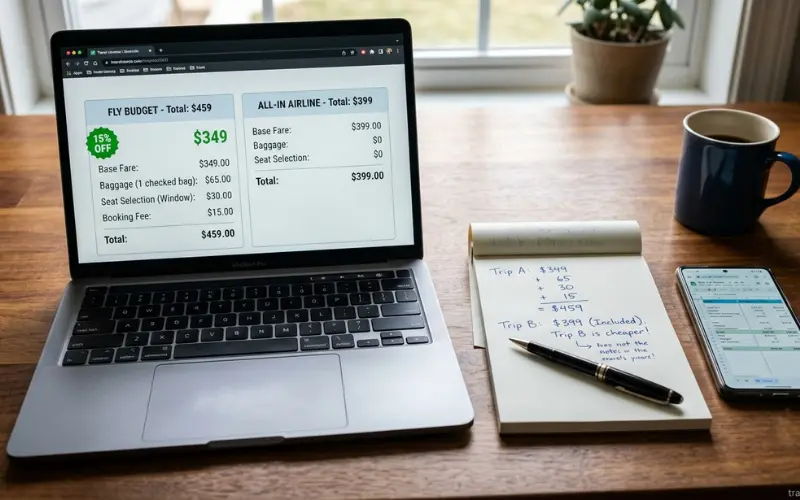
A 15% off code sounds great until you run the actual numbers against the total trip cost, not just the base fare.
Say a flight drops from $400 to $340 with a code. Feels like a win. But if that fare comes with a $60 change fee and no free carry-on, while the $410 fare next to it includes both, you’re not saving anything. You’re just moving the cost around.
Run this quick check before applying any offer:
- Add baggage, seat selection, and change fee to the discounted price
- Add the same line items to the next-cheapest option without the code
- Compare the two totals, not the two sticker prices
This is the step most traveltweaks offers roundups skip entirely. They show you the percentage off and stop there.
The Incognito Myth, and What Actually Moves Prices
A lot of advice repeats that private browsing stops airlines from raising prices based on your search history. That’s mostly folklore.
Dynamic pricing is driven by seat inventory, booking class availability, and demand algorithms, not cookies tracking your last five searches. Clearing cookies won’t touch any of that.
What does actually help:
- Price tracking tools (Google Flights price graph, or fare alert apps) show you the real trend over weeks, not a single snapshot
- Searching in a different currency sometimes surfaces a lower converted rate, since regional pricing isn’t always aligned
- Checking fares on a Tuesday or Wednesday afternoon still tends to catch newly released discount inventory, because that’s when airlines commonly load fresh fare buckets
Skip the incognito ritual. Spend that time watching a price graph for three or four days instead. You’ll learn more from the trend line than from clearing your browser history.
Stacking Offers Without Voiding Them
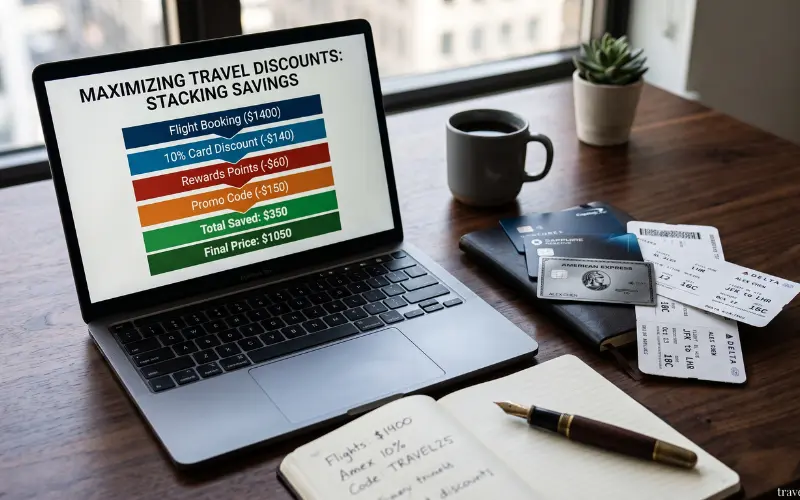
Most people assume they can pile every discount onto one booking. Terms usually say otherwise.
Cashback portals and cash-back credit cards almost never stack, since both are effectively rebating the same transaction from the merchant’s side. Pick one.
A workable stacking order that usually survives the fine print:
| Layer | What It Covers | Common Restriction |
|---|---|---|
| Loyalty program booking | Points or miles redemption | Can’t combine with most promo codes |
| Card travel portal | Points multiplier on booking | Often excludes third-party promo codes |
| Cashback browser extension | Percentage back after purchase | Frequently blocked if a coupon code is also applied |
| Merchant promo code | Direct price reduction | Usually the layer that conflicts with everything above |
If in doubt, use the code and skip the cashback extension for that one purchase. Losing 2% cashback to keep a 15% code is the better trade almost every time.
Spotting a Dead or Fake Offer Page Fast
Some pages exist purely to rank for the phrase “traveltweaks offers” without any real code behind them. A few tells:
- The article names a specific promo code but gives no screenshot of it working
- Customer “testimonials” have no names, dates, or verifiable source
- The page claims partnerships with major booking sites but links nowhere specific to confirm it
- Every section repeats the exact keyword phrase in a way no human would naturally write
If a page checks two or more of these boxes, don’t waste checkout time on it. Go straight to the merchant’s own current deals page instead.
A Simple Weekly Habit That Beats Most “Hacks”
Skip the hunt-for-a-code approach entirely and set a fifteen-minute weekly routine instead:
- Monday: check price alerts on your two or three saved routes
- Wednesday: scan the airline and hotel’s own promotions page directly
- Friday: compare total trip cost (not base price) across your top two options
This catches real, current offers instead of chasing whatever a search result surfaced last year.
FAQ
Are traveltweaks offers the same as airline sales?
Not always. Airline sales are broad, scheduled discounts on routes. Traveltweaks offers can include promo codes, bundle deals, or third-party discounts layered on top of a regular fare.
How do I know if a promo code is still active?
Test it directly on the merchant’s checkout page. If the code field rejects it or shows no price change, it’s expired, regardless of what a blog post claims.
Can I combine a hotel offer with a credit card portal booking?
Rarely. Booking through a card’s travel portal usually locks out third-party promo codes, since the portal is applying its own rate.
Why did my flight price go up after I searched a few times?
It’s almost always seat inventory shifting, not browser tracking. Certain fare classes sell out and the system moves to the next price tier automatically.
Is it worth signing up for every travel deal newsletter?
Only if you actually read them. Most value comes from two or three well-targeted lists tied to routes or hotel chains you use often, not a crowded inbox of generic blasts.
Do last-minute bookings ever beat advance ones?
Occasionally, mostly with hotels clearing unsold inventory in the final 48 hours. Flights rarely get cheaper last minute except in rare distress-fare situations.
What’s the biggest mistake people make chasing travel offers?
Comparing the discount percentage instead of the final total cost. A smaller discount on a fare with no hidden fees usually beats a bigger discount on one loaded with add-on charges.
Should I trust “verified” badges on deal aggregator sites?
Treat them as a starting point, not proof. Confirm any code or rate directly on the merchant’s own site before you commit.
