

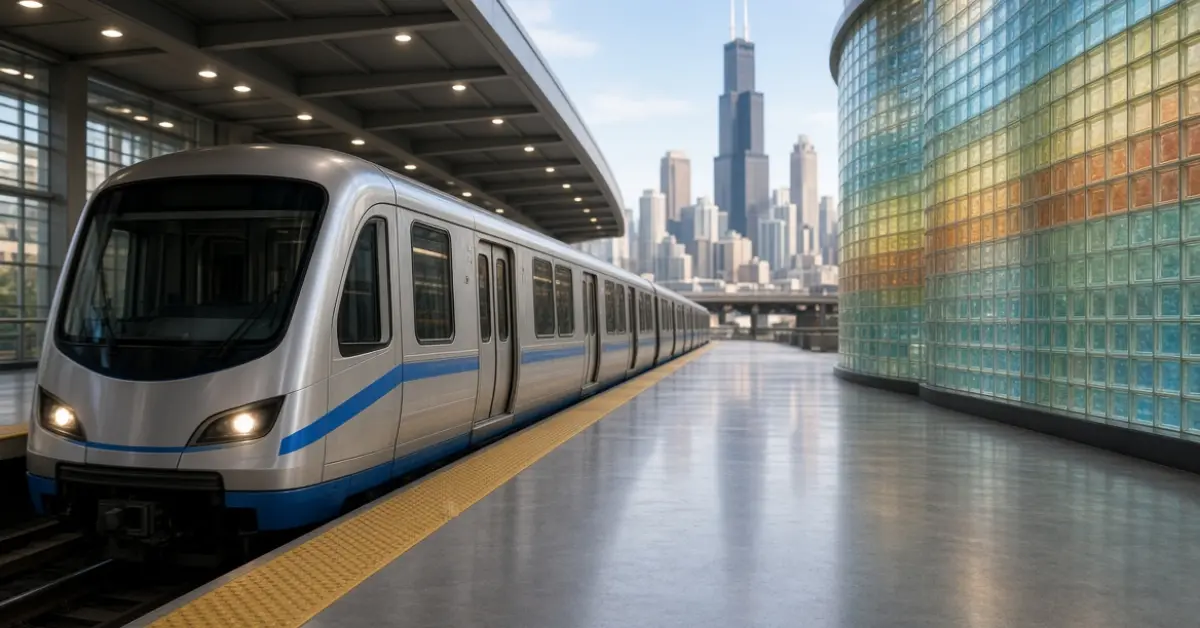
The CTA Blue Line runs directly from O’Hare to Downtown Chicago, 24 hours a day, with no transfers required. The ride takes 40 to 45 minutes and costs $5 or less per trip, making it the cheapest transit option between the airport and the Loop.
| Detail | Information |
|---|---|
| Line | CTA Blue Line (O’Hare branch) |
| Station location | Lower level, O’Hare parking garage |
| Fare | $5 or less (single ride) |
| Travel time to downtown | 40-45 minutes |
| Service hours | 24/7, every day |
| First downtown stop | Clark/Lake (transfers to 4 other lines) |
Which Terminal You Land In Changes Your Walk
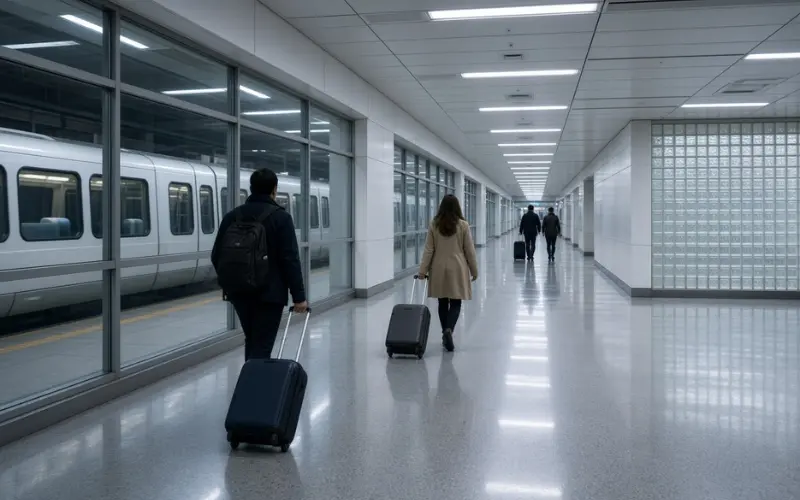
If you land at Terminal 1, 2, or 3, the Blue Line station is a straight shot. Follow the “Trains to City” signs through the pedestrian tunnels in the basement level, and you’ll reach the platform in under 10 minutes from baggage claim.
Terminal 5 is different because it’s the international terminal and sits apart from the main complex. From there, board the free Airport Transit System (ATS) train, ride it to Terminal 2, and then follow the same “Trains to City” signage to reach the Blue Line platform. Skipping this step is the single most common mistake international arrivals make, since Terminal 5 has no direct Blue Line access.
Buying Your Fare
Fare vending machines sit right outside the O’Hare Blue Line platform and take both cash and credit cards. You’ll load a Ventra Card or Ventra Ticket, though a contactless bank card or a mobile wallet app on your phone works just as well at the faregate, so you can skip the machine entirely if you’re paying by tap.
Your fare covers up to two free transfers to other CTA trains or buses within two hours, using that same card or device. That matters if your hotel is a bus ride away from your downtown train stop.
What the Ride Actually Looks Like
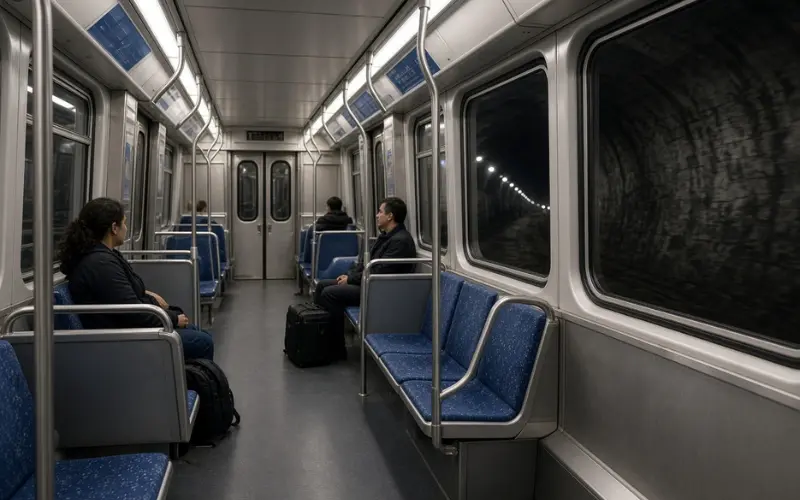
Trains from O’Hare run through the O’Hare branch before entering the subway downtown, so you won’t need to switch trains at any point. The ride is mostly underground once you clear the northwest side stations like Rosemont and Jefferson Park.
Your first real decision point downtown is Clark/Lake, where you can transfer to the Brown, Green, Orange, Pink, or Purple Line. If your hotel is near the Magnificent Mile or Millennium Park, staying on to Washington or Monroe usually puts you closer. Travelers heading to the Loop’s business core or connecting to Amtrak and Metra often ride one stop further to Clinton, which sits right next to Chicago Union Station.
Blue Line vs Taxi, Rideshare, and Shuttles
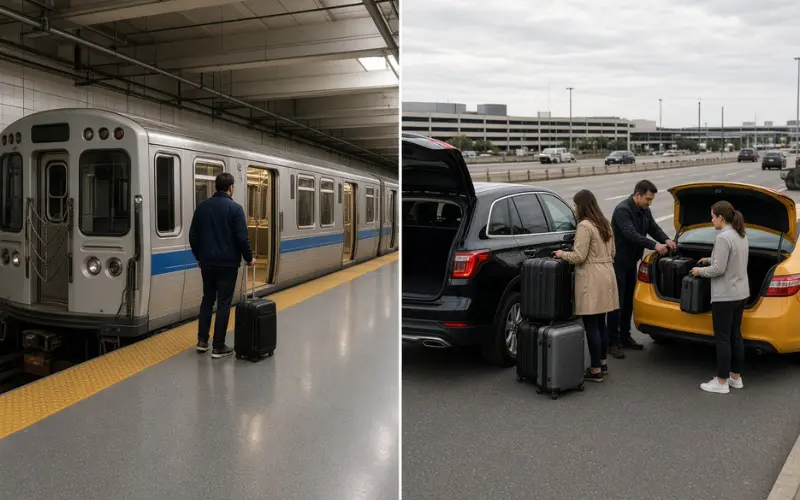
A taxi or rideshare covers the same distance in roughly the same time during light traffic, but pricing swings hard. Expect around $35 to $50 for a standard rideshare, with surge pricing during rush hour or bad weather pushing that past $100. Shuttle vans run cheaper than a private ride but still start above $25 and depend on how many stops the driver makes before yours.
For a solo traveler or anyone without heavy luggage, the Blue Line wins on price every single time. Groups of three or four splitting a rideshare may find the math flips in favor of a car, especially late at night when frequency drops.
Real-World Warnings Before You Ride
Late-night frequency drops. The Blue Line runs all night, but trains space out more between midnight and 4 a.m. Budget extra waiting time if you’re on a red-eye arrival.
Luggage space is standing room only. There are no dedicated luggage racks. Position bags between your legs or against a wall, especially during weekday rush hour when cars fill up fast.
Construction affects the O’Hare branch periodically. CTA occasionally runs a modified schedule during non-rush hours and weekends for track work. Check the Blue Line status page on transitchicago.com before you fly so you’re not caught off guard by a schedule change.
If you’re connecting onward to a flight out of another U.S. hub, our guide on getting from JFK to Manhattan by subway covers a similar airport-to-city transit route. And if Seattle is next on your itinerary, see Sea-Tac Airport to downtown Seattle for the light rail equivalent.
FAQs on O’Hare to Downtown Chicago
Does the Blue Line go from O’Hare airport to downtown Chicago?
Yes, every train that departs the O’Hare station runs through downtown Chicago on its way to Forest Park, so no transfer is needed to reach the Loop.
What is the best way to get to O’Hare to Downtown Chicago?
The Blue Line is the best combination of cost and reliability, running 24 hours a day for $5 or less, with a 40 to 45 minute ride to the Loop.
How do I get to the CTA Blue Line at O’Hare?
Follow “Trains to City” signs from your terminal. Terminals 1, 2, and 3 connect directly through pedestrian tunnels, while Terminal 5 requires riding the free ATS shuttle to Terminal 2 first.
How much does it cost to ride the Blue Line from Chicago airport?
A single ride costs $5 or less, and that fare includes up to two free transfers to other CTA trains or buses within two hours.
Can I use a credit card to pay for the Blue Line at O’Hare to Downtown Chicago?
Yes, vending machines at the station accept cash and credit, and you can also tap a contactless bank card or mobile wallet directly at the faregate without buying a Ventra Card.
Which downtown stop should I get off at for the Loop or Magnificent Mile?
Washington or Monroe puts you closest to the Loop and Magnificent Mile, while Clinton is the better choice if you’re connecting to Union Station or Amtrak.
Is the Blue Line safe to ride late at night from O’Hare?
The line runs around the clock and is generally safe, though trains are less frequent overnight, so expect longer waits between midnight and 4 a.m.
Is there luggage storage on the Blue Line trains?
No, there are no dedicated luggage racks. Keep bags close to you and be prepared to stand during weekday rush hour when trains are busier.
