

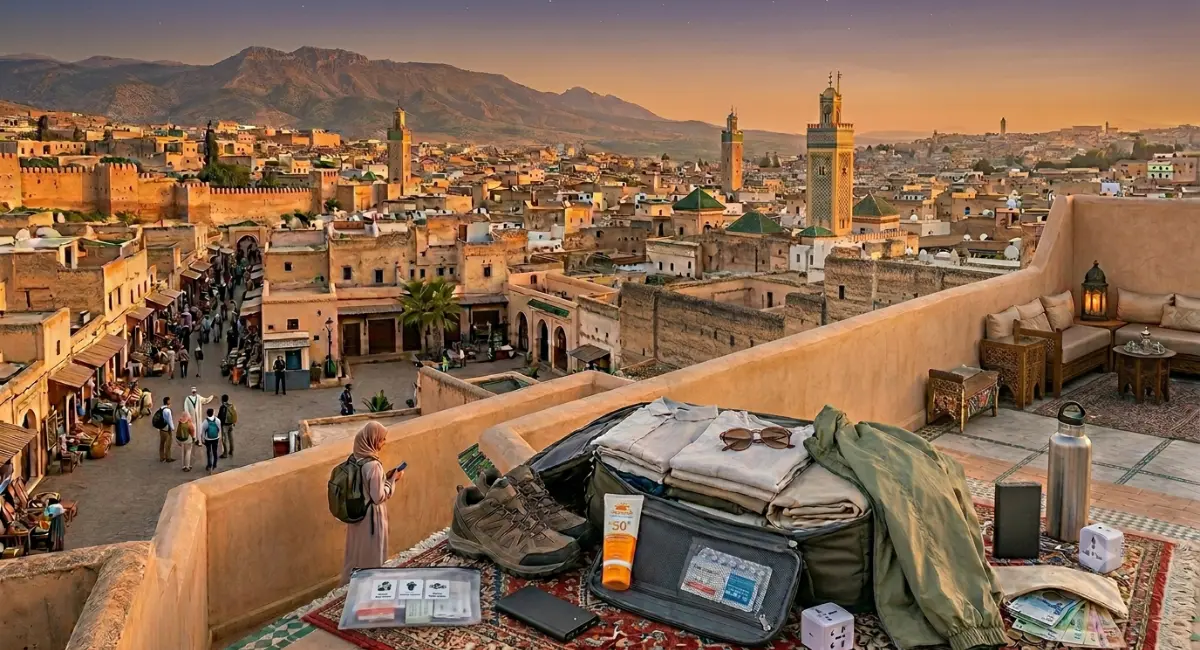
Morocco is a destination that combines ancient history, vibrant culture, breathtaking landscapes, and unforgettable adventures. From the bustling souks of Marrakech to the golden dunes of the Sahara Desert, Morocco offers experiences that few countries can match.
Whether you’re planning your first trip or looking to create the perfect itinerary, this comprehensive Morocco travel guide covers everything you need to know—including travel costs, safety tips, transportation options, packing advice, and destinations that many travel guides overlook.
Unlike many guides that focus only on popular attractions, this article helps you travel smarter, avoid common mistakes, and experience the authentic side of Morocco.
Why Choose Morocco for Your Next Adventure?
Morocco sits at the crossroads of Africa, Europe, and the Middle East, creating a unique blend of cultures and traditions.
Visitors love Morocco because it offers:
- Colorful medinas and traditional markets
- Stunning desert landscapes
- Beautiful mountain scenery
- Historic palaces and mosques
- Delicious cuisine
- Affordable travel opportunities
- Warm hospitality
Whether you enjoy cultural exploration, photography, hiking, luxury travel, or food experiences, Morocco has something for every traveler.
Best Time for Morocco Travel
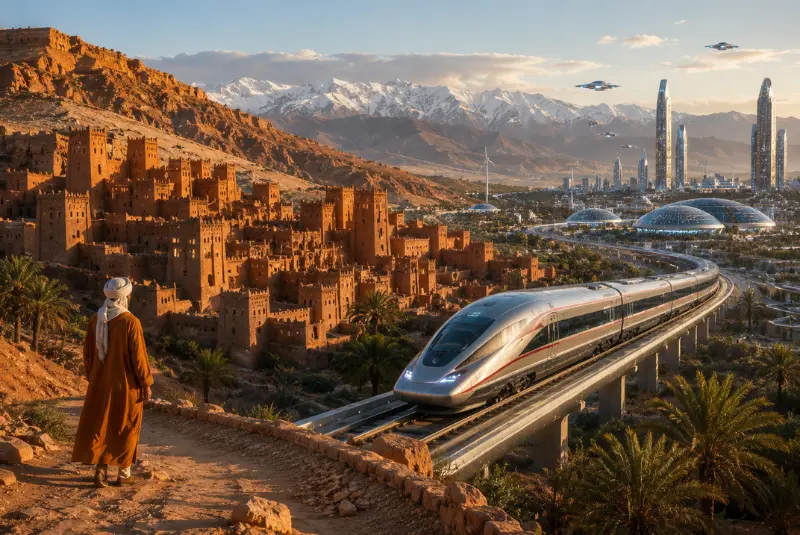
Choosing the right season can significantly improve your experience.
Spring (March to May)
Spring is widely considered the best time to visit Morocco.
Benefits include:
- Pleasant temperatures
- Blooming landscapes
- Comfortable sightseeing
- Excellent hiking conditions
Autumn (September to November)
Another ideal period for Morocco travel.
Expect:
- Mild weather
- Fewer crowds
- Great desert experiences
- Comfortable city exploration
Summer (June to August)
Summer can be extremely hot, especially in inland cities and the Sahara Desert.
Best for:
- Coastal destinations like Essaouira
- Beach vacations
- Surfing
Winter (December to February)
Winter brings cooler temperatures and snow in the Atlas Mountains.
Perfect for:
Desert excursions
City sightseeing
Mountain adventures
Top Places to Visit During Morocco Travel
Marrakech
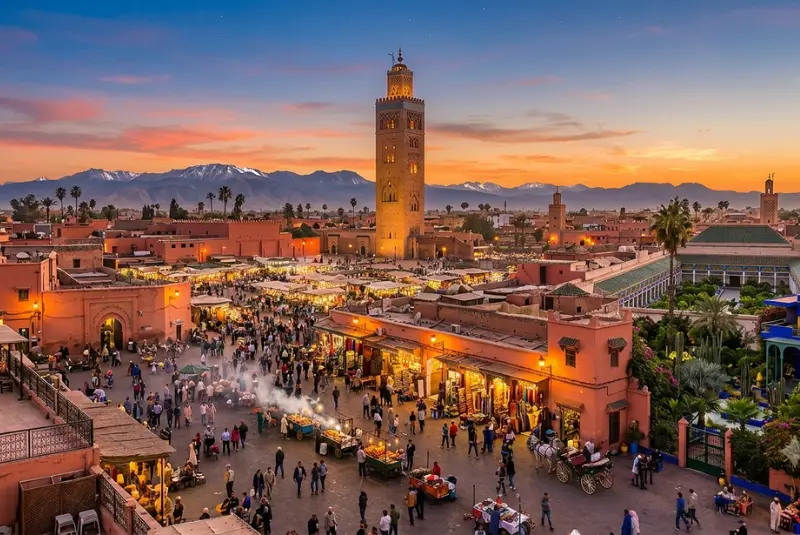
Known as the Red City, Marrakech is Morocco’s most famous destination.
Highlights include:
- Jemaa el-Fnaa Square
- Bahia Palace
- Majorelle Garden
- Koutoubia Mosque
- Traditional souks
The city offers an exciting mix of culture, shopping, and nightlife.
Chefchaouen
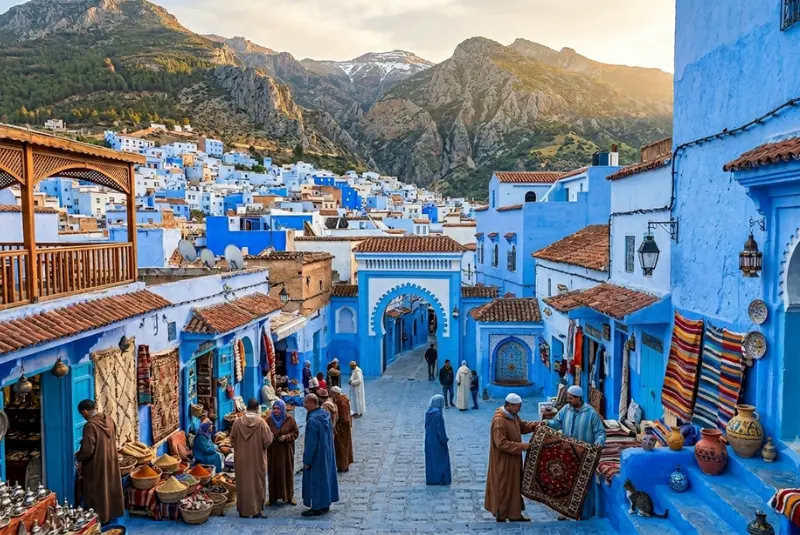
Often called the Blue Pearl of Morocco, Chefchaouen is famous for its blue-painted streets and buildings.
Why visit:
- Stunning photography opportunities
- Relaxed atmosphere
- Beautiful mountain views
- Authentic local culture
Sahara Desert
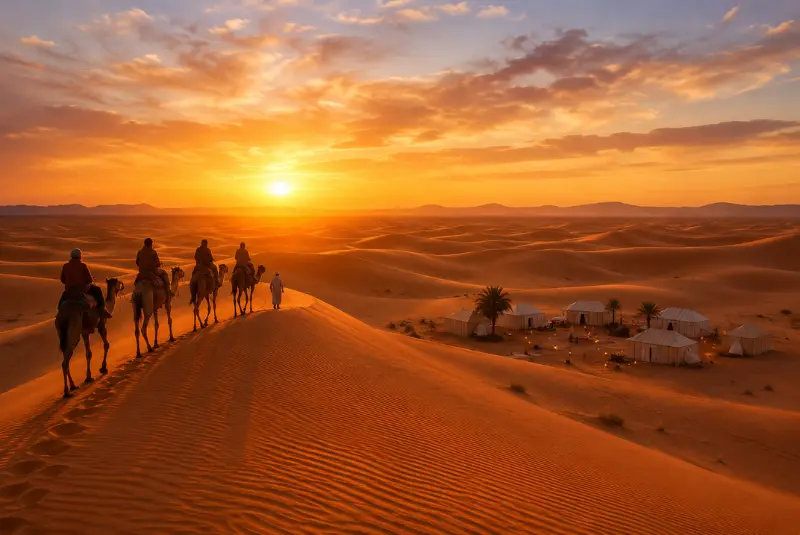
No Morocco travel experience is complete without visiting the Sahara.
Popular activities:
- Camel trekking
- Luxury desert camps
- Sandboarding
- Stargazing
- Sunrise and sunset photography
Spending at least two nights in the desert provides the best experience.
Fez
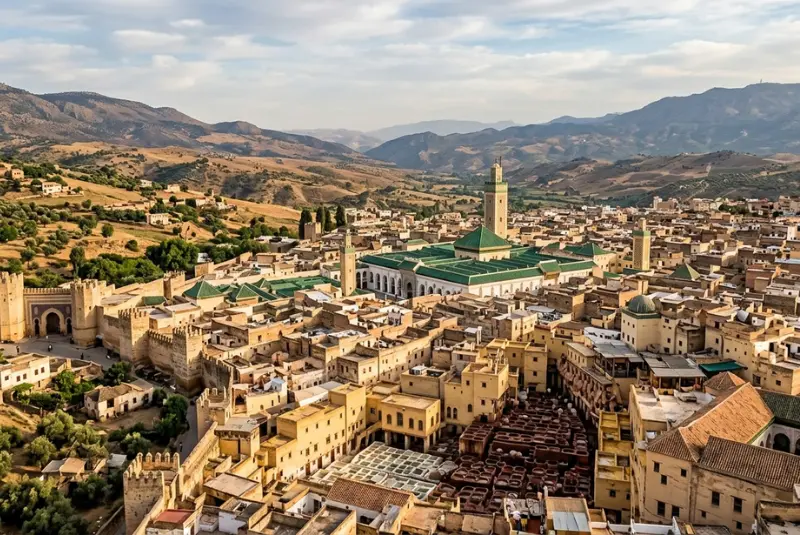
Fez is Morocco’s cultural and spiritual capital.
Top attractions:
- Ancient Medina
- Al Quaraouiyine University
- Traditional tanneries
- Artisan workshops
It offers one of the most authentic cultural experiences in the country.
Essaouira
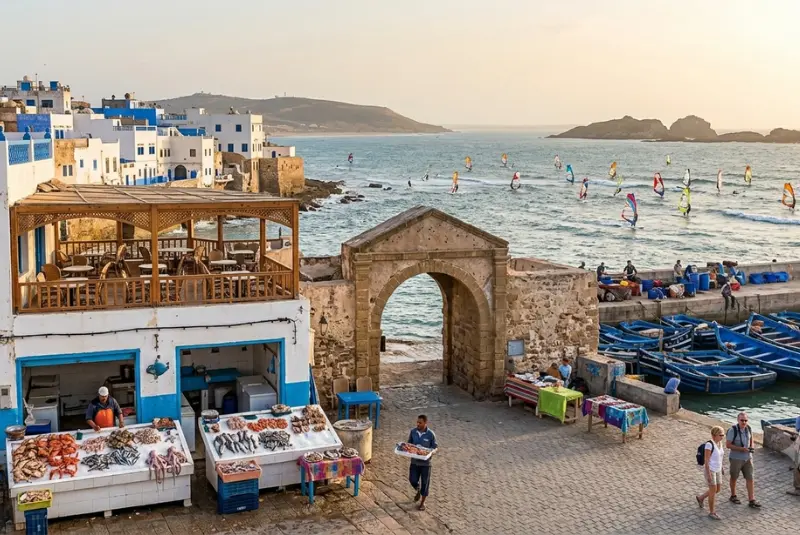
This coastal city provides a refreshing contrast to Morocco’s busy inland destinations.
Visitors enjoy:
- Atlantic Ocean views
- Fresh seafood
- Windsurfing
- Historic medina
- Relaxed atmosphere
Casablanca
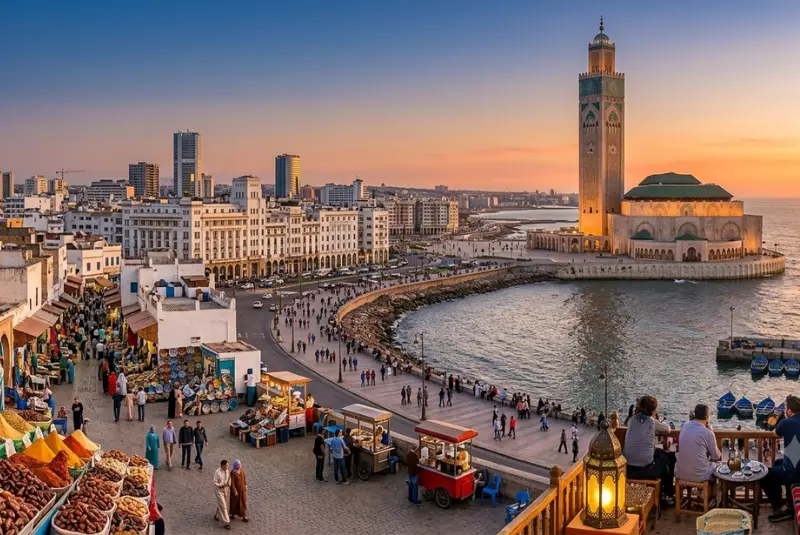
Casablanca combines modern Morocco with traditional heritage.
Don’t miss:
- Hassan II Mosque
- Corniche waterfront
- Local markets
- Art Deco architecture
Morocco Travel Costs
Many travelers underestimate how affordable Morocco can be.
Budget Travelers
Estimated daily budget:
| Accommodation | $20–$40 |
| Food | $10–$20 |
| Transportation | $5–$15 |
| Total | $35–$75 per day |
Mid-Range Travelers
Estimated daily budget:
| Accommodation | $60–$120 |
| Food: | $20–$40 |
| Activities | $20–$50 |
| Total | $100–$210 per day |
Luxury Travelers
Estimated daily budget:
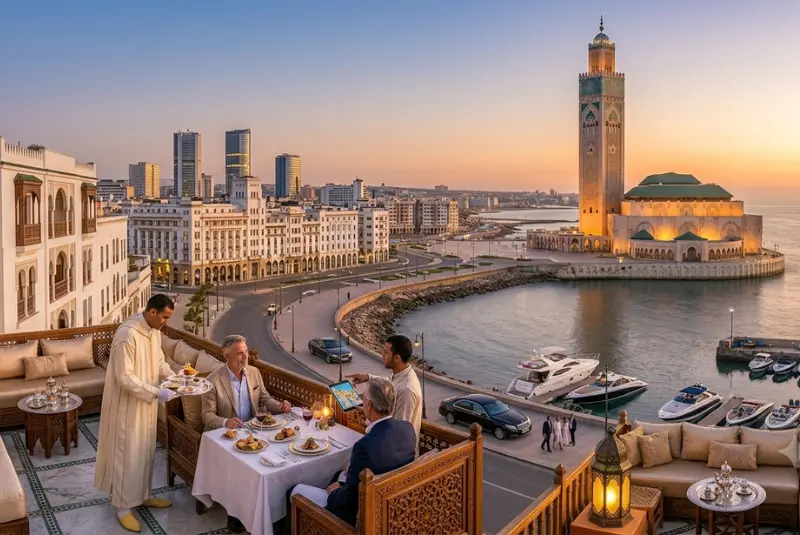
- Luxury riads and hotels
- Private tours
- Premium dining
| Total | $250–$600+ per day |
How to Get Around Morocco
Transportation is easier than many first-time visitors expect.
Options include:
- Trains
- Buses
- Rental cars
- Domestic flights
- Private drivers
- Taxis
For flexibility, renting a car works well outside major cities.
For city-to-city travel, Morocco‘s train system is comfortable and affordable.
Morocco Travel Safety Tips
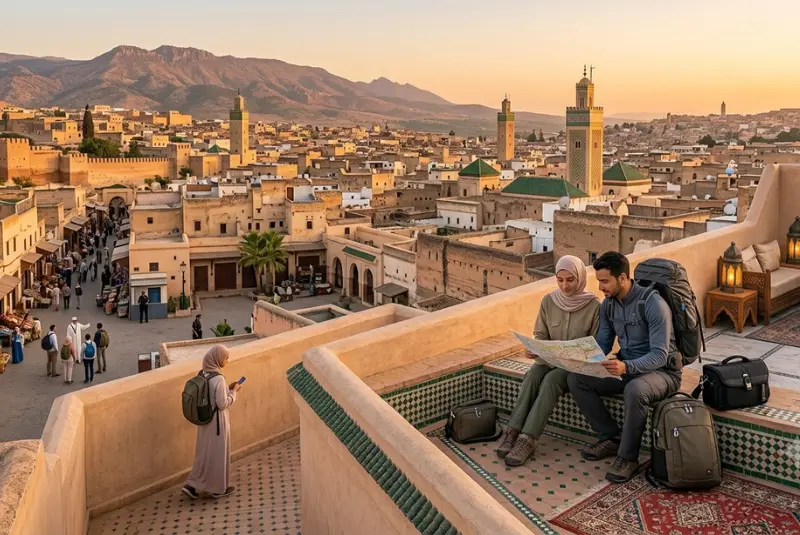
Morocco is generally safe for tourists, but smart precautions are important.
General Safety
- Keep valuables secure
- Avoid displaying expensive items
- Stay alert in crowded markets
- Use reputable transportation
Safety for Solo Female Travelers
Women can travel safely in Morocco with extra awareness.
Recommendations:
- Dress modestly
- Avoid isolated areas at night
- Use licensed guides when needed
- Stay in reputable accommodations
Avoiding Tourist Scams
Common scams include:
- Fake guides
- Inflated taxi fares
- Overpriced souvenirs
- Unofficial tour offers
Politely decline unwanted assistance and negotiate prices when shopping.
Morocco Travel Packing List
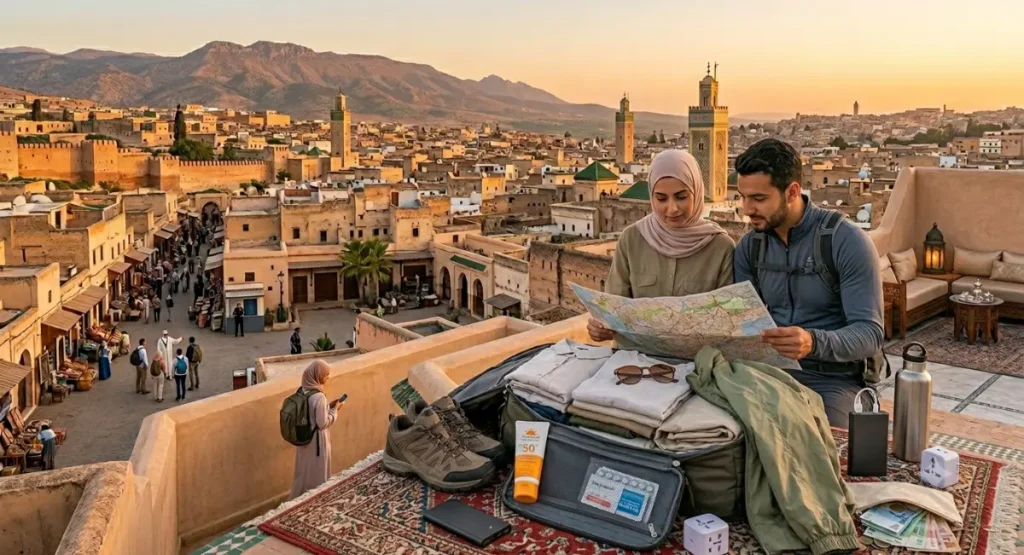
Many travel guides ignore this important section.
Bring:
- Lightweight clothing
- Comfortable walking shoes
- Sunscreen
- Sunglasses
- Portable power bank
- Reusable water bottle
- Travel adapter
- Cash for tips and markets
- Light jacket for evenings
- Basic medications
Packing appropriately will make your trip much more comfortable.
Is Morocco safe for tourists?
Yes, Morocco is generally safe for tourists. Most visitors travel without issues, but it’s important to stay aware of your surroundings, protect valuables, and avoid common tourist scams in crowded areas.
What is the best time for Morocco travel?
The best time to visit Morocco is during spring (March to May) and autumn (September to November). These seasons offer pleasant temperatures for sightseeing, desert trips, and outdoor activities.
How many days do I need in Morocco?
A 7 to 10-day trip is ideal for first-time visitors. This allows enough time to explore Marrakech, Fez, Chefchaouen, the Sahara Desert, and other popular destinations.
Is Morocco expensive to visit?
Morocco is relatively affordable compared to many European destinations. Budget travelers can spend $35–$75 per day, while mid-range travelers typically spend $100–$210 per day.
Do I need cash in Morocco?
Yes, carrying cash is recommended. While hotels and larger restaurants often accept cards, many local shops, markets, taxis, and small businesses prefer cash payments.
Can tourists drink alcohol in Morocco?
Yes, alcohol is available in many hotels, restaurants, bars, and tourist-friendly establishments. However, Morocco is a predominantly Muslim country, so alcohol is not widely available everywhere.
What should I wear in Morocco?
Modest clothing is recommended, especially when visiting religious sites and traditional areas. Lightweight, breathable clothing works best, along with comfortable walking shoes.
Is Morocco suitable for solo female travelers?
Yes, many women travel solo in Morocco successfully. Dressing modestly, staying in reputable accommodations, and using licensed guides when necessary can help ensure a comfortable experience.
What are the must-visit places in Morocco?
Some of the top destinations include Marrakech, Chefchaouen, Fez, the Sahara Desert, Essaouira, Casablanca, and the Atlas Mountains.
Do I need a visa to visit Morocco?
Visa requirements depend on your nationality. Many travelers can enter Morocco visa-free for short stays, but it’s always best to check the latest entry requirements b
Final Thoughts
Morocco is a destination that stays with you long after your journey ends. From the vibrant streets of Marrakech and the blue alleys of Chefchaouen to the vast Sahara Desert and the historic medinas of Fez, every corner of the country offers something unique.
What makes Morocco truly special is its combination of culture, history, adventure, and hospitality. You can explore ancient cities, ride camels across golden dunes, enjoy flavorful cuisine, hike through stunning mountain landscapes, and experience traditions that have been preserved for centuries.
For the best Morocco travel experience, plan your itinerary carefully, travel with an open mind, respect local customs, and allow enough time to explore beyond the major tourist attractions. Hidden gems such as Essaouira, the Atlas Mountains, and traditional Berber villages often become the most memorable parts of the journey.
Whether you’re visiting for a week or embarking on a longer adventure, Morocco offers unforgettable experiences for every type of traveler. With proper planning, realistic expectations, and a spirit of exploration, your Morocco travel adventure can become one of the most rewarding trips you’ll ever take.
