

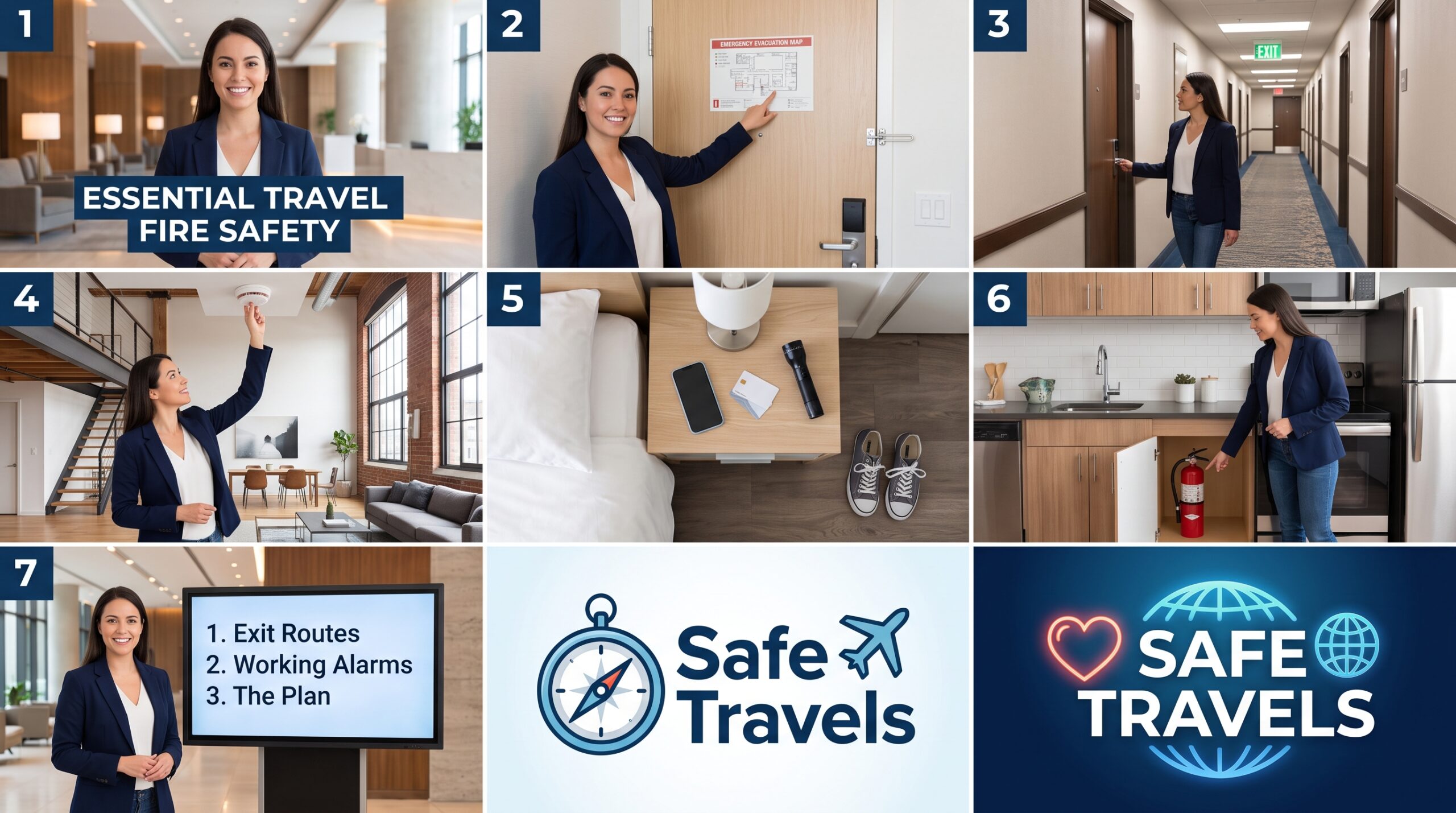
When planning a vacation or a business trip, most travelers focus on booking flights, organizing itineraries, and packing the right gear. However, property safety and emergency readiness are often overlooked until something goes wrong. Whether you are staying in a luxury hotel, a roadside motel, or a holiday rental, knowing how to spot hazards and react quickly in an emergency is just as vital as practicing safety measures at home.
Unfamiliar surroundings, different building layouts, and the excitement of traveling can cause even experienced travelers to drop their guard. Following a few simple safety checks can ensure your trip remains stress-free and secure.
1. Conduct a Quick Safety Audit Upon Arrival
Before unpacking your bags or relaxing after a long journey, take two minutes to inspect your room and immediate surroundings:
- Locate the Emergency Exit Route: Look at the evacuation map fixed behind your room’s entry door. Count the number of doors between your room and the nearest emergency stairwell so you can find your way even in pitch-black conditions or dense smoke.
- Inspect Power Outlets & Appliances: Travelers often plug in multiple high-power devices at once. Ensure wall sockets aren’t overloaded, and check that room heaters or irons have clear space around them.
- Review General Safety Protocols: Just as you would follow essential tips for a safe and thrilling overseas adventure travel, keeping basic environmental hazards in mind ensures smooth travels wherever you go.
2. Managing Lithium-Ion Battery Hazards on the Road
Modern travelers carry an array of battery-powered electronics—smartphones, laptops, power banks, camera gear, and even portable e-scooters. While convenient, third-party fast chargers and damaged batteries pose a growing fire risk in enclosed hotel rooms and transport hubs.
Whether you are traveling or managing routines at home, adhering to official safety guidelines is critical. For a complete guide on safe charging practices, official national themes, and home escape plans, check out the Fire Safety Week 2026: Dates (2026-2027), Theme & Checklist guide to help protect your family and belongings.
3. What to Do If a Hotel Fire Alarm Sounds
If a alarm sounds in the middle of the night, staying calm and acting methodically is key to getting out safely:
- Test the Door: Touch the door handle or the top of the door with the back of your hand. If it feels hot, do not open it. Stay inside, seal the door cracks with wet towels, and call emergency services.
- Crawl Low Under Smoke: Smoke and toxic fumes rise quickly. Clean air remains closer to the floor, so crawl low if you encounter smoke in hallways.
- Never Use Elevators: Always use designated emergency exit stairs. Power failures during an emergency can easily leave elevators trapped between floors.
- Head to the Meeting Point: Once outside, proceed immediately to the designated assembly area so staff and first responders can account for all guests.
Smart Preparation Leads to Better Journeys
Travel safety isn’t about worrying over every detail—it’s about building quick, muscle-memory habits that keep you protected. Combining simple precautions with practical advice on how to travel more comfortably without spending more than necessary ensures you enjoy a seamless, secure, and cost-effective trip.
Next time you check into a hotel, take that extra minute to locate your emergency exit. It costs nothing, takes seconds, and could save your life.
