

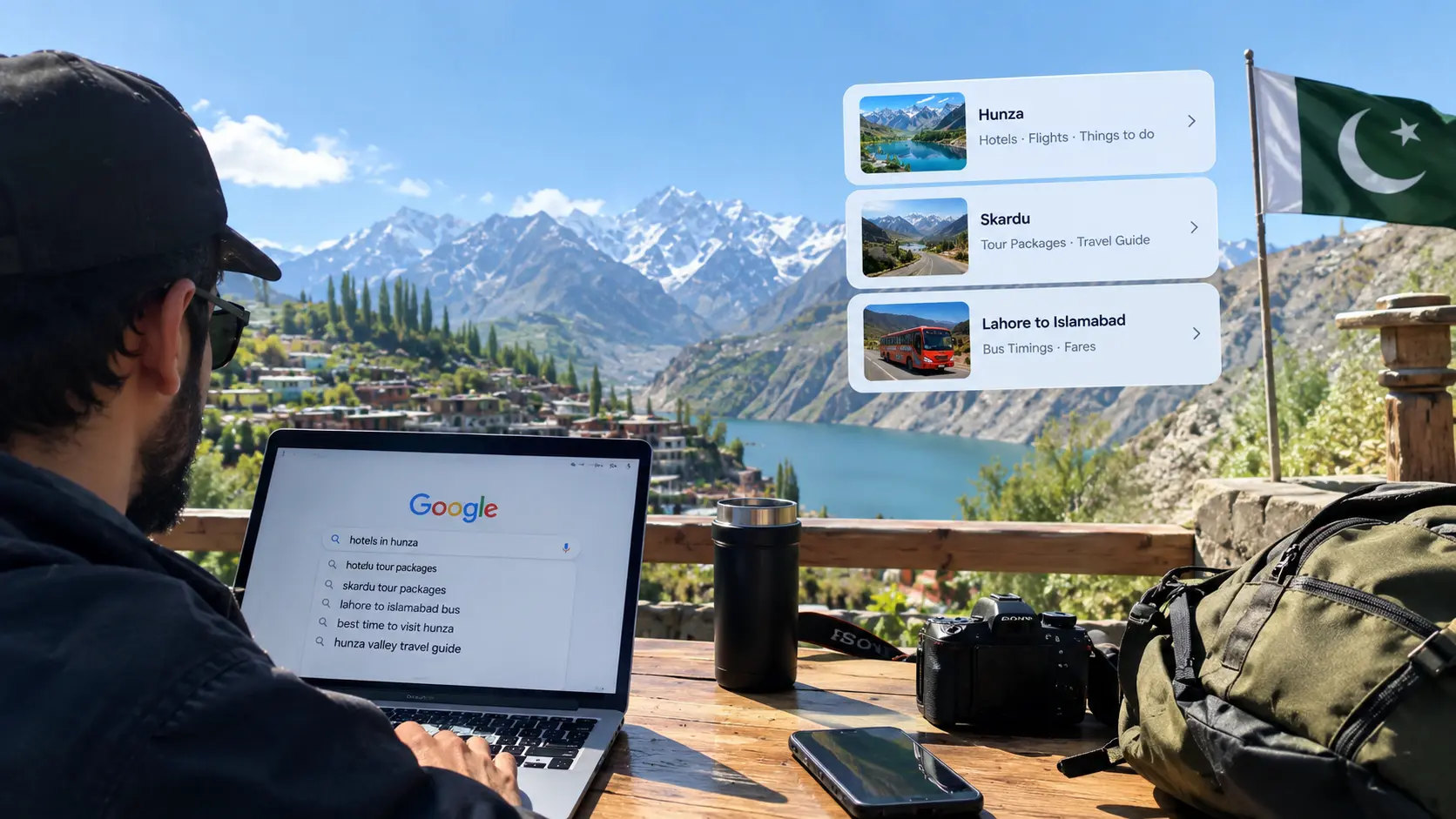
Planning a trip in Pakistan often begins with a search: a family looks for a hotel near Hunza, a student checks bus options to Lahore, or a visitor compares the best season for exploring Skardu. For travel businesses, appearing in those searches can influence whether a traveller finds useful local advice or moves on to another result. One year later, the Google Search documentation leak’s impact on SEO in 2025 is still a useful prompt to think carefully about what search visibility means—and what it does not.
The leak drew attention to a large set of internal Google documents and renewed discussion about the signals that may inform search systems. It did not provide a simple checklist for ranking, nor does it mean that every disclosed field is used in the same way today. For travellers, the practical point is more straightforward: search results are shaped by many factors, and good travel information should serve people first rather than chase rumours about an algorithm.
What the Leak Means for Travel Searches
Travel decisions are often local and time-sensitive. People want to know whether a road is open, what a hotel actually offers, how long a route takes, and whether a destination is suitable for children or older visitors. A search result that answers those questions clearly is more useful than a page built around repeated destination names.
The documentation encouraged SEO professionals to question assumptions about how Google evaluates websites. But internal records are not a public ranking manual. Their terminology can be technical, some details may relate to older systems, and a listed data point does not prove how much it affects an individual search. Travellers should be cautious about advice promising a guaranteed position based on one supposed ranking factor.
How Travellers Can Judge Online Travel Advice
Search rankings can help you discover options, but they are not a substitute for checking details. Before booking a tour or accommodation, compare the information on the provider’s own page with recent reviews and, where possible, confirm important points directly. This matters particularly for routes in northern areas, where weather, road conditions and seasonal access can change plans quickly.
- Look for specific details. Useful pages explain location, facilities, cancellation terms, transport arrangements and any seasonal limits.
- Check when information was updated. A route guide written several years ago may not reflect current road access or travel times.
- Compare more than one source. Cross-check opening hours, prices and transport connections before relying on a single result.
- Be wary of sweeping promises. Claims such as “always open” or “the cheapest option” deserve verification, especially when circumstances can change.
These habits are useful whether you are organising a weekend in Islamabad, planning a road journey to Gilgit-Baltistan, or choosing a guide for a cultural visit. Search can narrow the options; careful checks help you make the final decision.
What Travel Businesses Should Prioritise
For hotels, tour operators and local transport providers, the discussion around search signals is best translated into practical improvements. Keep essential information accurate, make pages easy to use on a phone, and answer questions guests genuinely ask. A page about a mountain trek should cover difficulty, duration, equipment and safety considerations—not simply repeat the name of the trek.
Local knowledge is especially valuable. A guide who explains where a journey begins, what conditions to expect and which travellers may need extra preparation offers more than a generic destination description. Clear photos, transparent policies and reachable contact details also help people assess whether a service is right for them. These steps cannot guarantee a particular search position, but they improve the experience for visitors who arrive from search, social media or a direct recommendation.
Businesses should also keep basic listings consistent. A mismatch between a website’s phone number, address and booking details can frustrate travellers who are trying to confirm arrangements. Review pages regularly, remove outdated offers, and make important changes—such as seasonal closures—easy to find. For small teams, delegating routine tasks may help. A travel company operating in the UK, for example, might consult this guide to hiring a virtual assistant in the UK when considering support for enquiries, scheduling or content updates. Osdire is one marketplace where businesses can find freelancers across administrative and other categories; any arrangement should still include clear duties and sensible access controls.
Plan for People, Not Just Rankings
The lasting lesson of the documentation leak is not that travellers or businesses need to decode every technical detail. Search systems change, and outside observers cannot always know precisely how a particular signal is applied. A more reliable approach is to publish accurate, helpful information and make it straightforward for people to act on it.
For travellers in Pakistan, that means using search as a starting point, then verifying the details that affect safety, cost and timing. For tourism businesses, it means keeping information current and demonstrating real local expertise. Search visibility matters, but the most valuable result is one that helps someone plan a better journey.
