

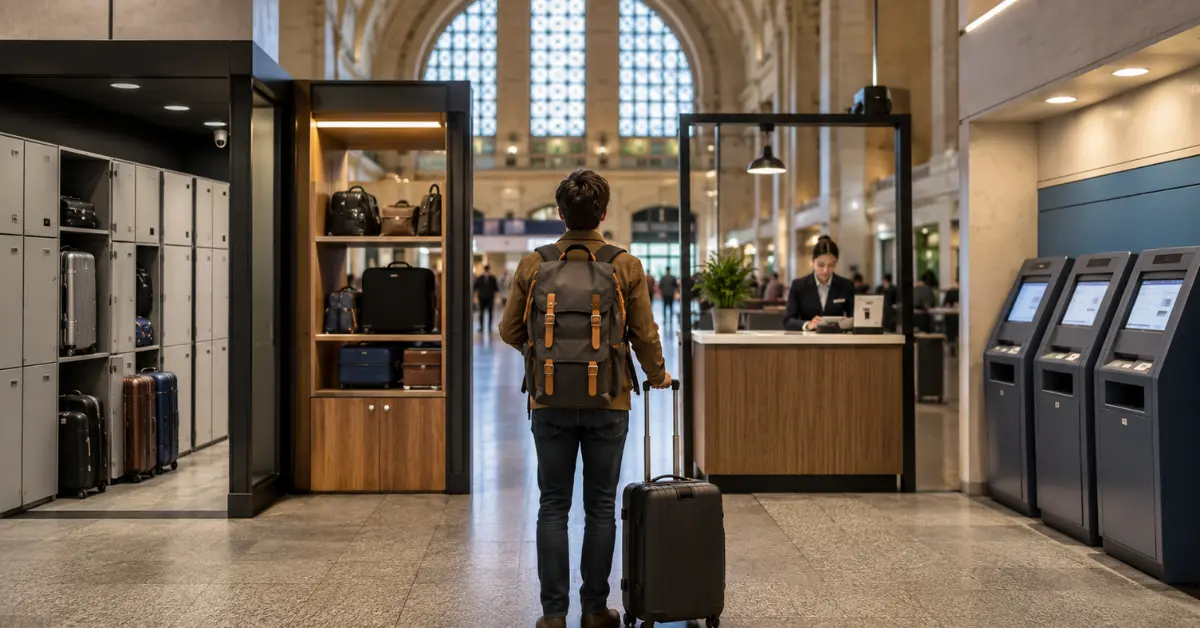
is there any Luggage Storage Options Near Washington Union Station ? Washington Union Station does not have self-service lockers. Your two real options are Amtrak’s staffed Parcel Check counter (ticketed passengers pay $10 per item for 24 hours, non-ticketed pay $20) or a third-party network like Bounce, Stasher, Nannybag or LuggageHero, which store bags in nearby shops and hotels for roughly $2 to $8 a day. For most travelers doing a few hours of sightseeing, the third-party option ends up cheaper and closer to where you’re actually walking.
Why Union Station Doesn’t Have Lockers Anymore
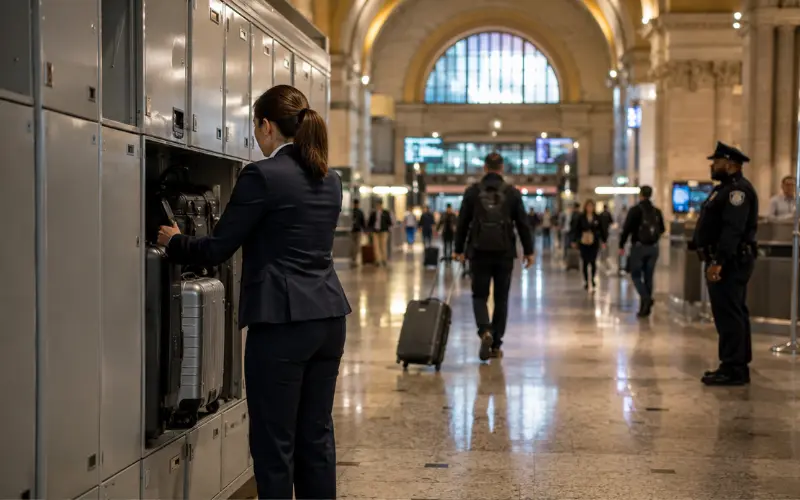
Most articles just tell you lockers don’t exist. Here’s the part they skip: DC’s transit hubs pulled unattended lockers years ago over security concerns, and that policy has never reversed. It’s the same reason you won’t find self-serve lockers at Reagan National or Dulles either. Any bag left unattended in a federal-adjacent transit hub in DC gets flagged, and that’s not a risk any station operator wants to manage.
That’s the practical reason Amtrak runs Parcel Check as a staffed counter instead of bringing back lockers. A human checks the bag in, tags it, and hands it back. It’s slower than a locker, but it’s the only storage that’s physically inside the station.
Amtrak Parcel Check: What Nobody Tells You About the Fine Print
The pricing is well documented: $10 per item for ticketed Amtrak passengers, $20 for everyone else, capped at 24 hours. What’s less documented is how this actually plays out on a busy day.
A few things I’ve noticed and heard from other travelers:
- The counter has limited hours. It is not a 24/7 service, so if you’re catching a red-eye or an early morning train, check current hours before you plan around it. Staffing gaps happen around holidays.
- You need to keep your claim ticket. Lose it and you’ll be dealing with station staff and possibly ID verification to get your bag back, which eats into your sightseeing time.
- Oversized items get complicated. Skis, large duffel bags for group trips, or anything outside a standard suitcase footprint may be turned away or charged differently. Call ahead if you’re not traveling with a standard rolling bag.
- It’s genuinely secure, since it’s staffed and behind a counter, not an open locker bank. If your top priority is knowing a person has eyes on your bag the entire time, this beats an unattended locker even where those exist elsewhere.
Third-Party Storage: How the Big Networks Actually Differ
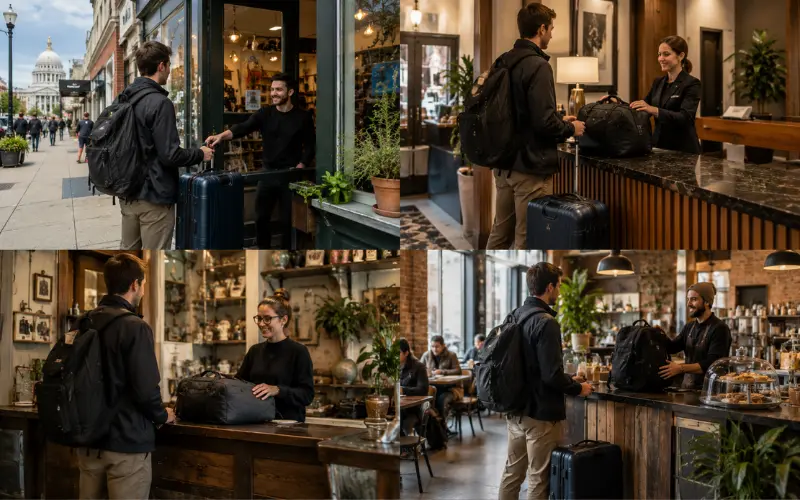
This is where most comparison articles get lazy. They list four services with nearly identical marketing copy and expect you to pick blind. Having actually used two of these, here’s what separates them in practice.
Bounce and Stasher
both work off a similar model: you book a slot at a partner shop, hotel, or business near the station, drop your bag, and get a QR code or PIN for pickup. The partner locations vary in quality. I’ve had a great experience at a shop three blocks north of the station with a genuinely friendly owner, and a mediocre one at a spot where the bag storage felt like an afterthought behind a retail counter. Read the most recent reviews for the specific location, not just the brand.
LuggageHero
is the only one of the group offering true hourly pricing (from roughly $1.29 to $1.99 an hour depending on the location) rather than forcing you into a full-day rate. If you only need two or three hours between checkout and a train, this saves real money over a flat daily fee.
Nannybag and Qeepl
run on the same partner-shop model as Bounce and Stasher, with slightly different coverage in the neighborhoods around H Street and NoMa. Coverage density matters more than brand loyalty here: whichever service has a partner location closest to your actual walking route wins, regardless of which app you prefer.
Quick Comparison: Union Station Luggage Storage Options
| Option | Typical Price | Best For | Watch Out For |
|---|---|---|---|
| Amtrak Parcel Check | $10/item (ticketed), $20/item (non-ticketed), 24 hrs | Amtrak passengers wanting on-site, staffed storage | Limited counter hours, oversized item restrictions |
| Bounce / Stasher | ~$6–$8/day | Full-day sightseeing trips | Partner location quality varies by shop |
| LuggageHero | ~$1.29–$1.99/hr, ~$8–$9/day cap | Short 2–4 hour layovers | Fewer locations than Bounce in some pockets of DC |
| Nannybag / Qeepl | ~$2.50–$7.39/day | Travelers wanting more location choice | Similar partner-shop variability as Bounce/Stasher |
Matching the Option to Your Actual Trip
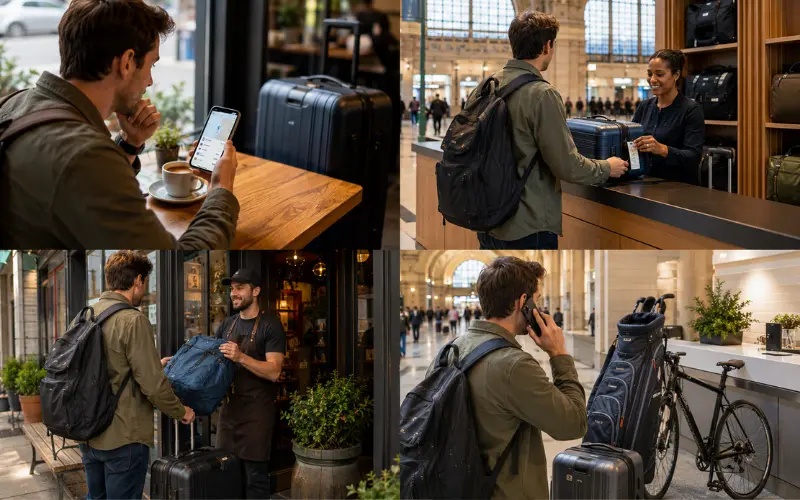
This is the piece nobody else addresses directly: the right choice depends on how long you’re actually storing the bag, not just which service has the flashiest homepage.
If you have 1 to 3 hours between arriving and your train, hourly pricing from LuggageHero almost always beats a flat daily rate elsewhere. Paying $8 for a two-hour buffer when you could pay $3 is money you didn’t need to spend.
If you’re storing bags for a full day (say, dropping them at 9am and grabbing them at 6pm before a late train), a flat daily rate from Bounce, Stasher, or Nannybag usually comes out cheaper than hourly billing would.
If you’re traveling with an Amtrak ticket and want the simplest possible option, Parcel Check inside the station removes the need to walk anywhere at all. You’re trading a bit more money and a shorter storage window for zero extra walking with your bags.
If you’ve got oversized or unusual items, call the third-party provider’s support line before booking. Most partner shops have real space constraints, and a locked bike, a set of golf clubs, or multiple oversized suitcases for a family trip can get rejected at drop-off if you didn’t confirm capacity first.
A Practical Note From Experience
One thing worth knowing before you book anything: partner-shop storage in DC tends to cluster around H Street NE and the blocks just north of the station, not directly outside the main entrance. Budget an extra five to eight minutes of walking each way if you’re headed to one of those spots, especially with a rolling suitcase on DC’s uneven sidewalks near the H Street corridor.
Frequently Asked Questions
Is there any Luggage Storage Options Near Washington Union Station?
No. Union Station removed self-service lockers years ago and has not reinstated them. The only in-station option is the staffed Amtrak Parcel Check counter.
How much does Amtrak charge to store luggage at Union Station?
Ticketed Amtrak passengers pay $10 per item for up to 24 hours. Non-ticketed travelers pay $20 per item for the same window.
Is there a free way to store luggage near Union Station?
Not officially through any station service. Some hotels near Union Station will hold bags for guests at no charge, so it’s worth asking your hotel directly before paying a third-party service.
Can I store luggage overnight near Union Station?
Yes. Amtrak Parcel Check covers 24 hours, and most third-party services like Bounce, Stasher, and Nannybag allow overnight bookings, though pricing shifts to a daily or multi-day rate rather than hourly.
Is third-party luggage storage near Union Station actually safe?
The major providers (Bounce, Stasher, Nannybag, LuggageHero, Qeepl) all offer bag protection ranging from $500 to $13,000 depending on the service, and partner locations are vetted before being listed. Check recent reviews for the specific drop-off point, not just the platform’s overall rating.
How far do I have to walk to reach third-party luggage storage from Union Station?
Most partner locations sit within a 5 to 10 minute walk, clustered mainly around H Street NE and the streets just north of the station. Always confirm the exact address after booking, since app map pins are sometimes approximate.
Can I store oversized luggage, like skis or golf clubs, near Union Station?
Some partner shops can accommodate oversized items, but capacity is limited and not guaranteed. Contact the provider’s support line before booking if you’re carrying anything beyond a standard suitcase.
What happens if I lose my luggage claim ticket at Amtrak Parcel Check?
You’ll need to work with station staff to verify your identity and ownership of the bag before it’s released, which can take longer than a standard pickup. Keep the ticket somewhere secure and separate from the bag itself.
