

The Upper Mustang Motorbike Tour is often misunderstood. Some people imagine it as as a challenging off road adventure, and those who see it as a casual scenic ride. The reality is between the two. The truth lies somewhere in between. It is not a dangerous or technical ride, but it is not an easy one either. It demands patience, physical effort, and mental strength more than riding skill.
Many riders planning this journey ask the same question. How hard is the Upper Mustang motorbike tour really? The honest answer is that it is moderately difficult. The challenge does not come from steep climbs or risky trails. It is a result of prolonged riding, dusty and rough roads, strong winds, elevated altitude, and isolation of the area. Well prepared riders who know the nature of the land tend to arrive at the destination with ease and contentment.
This ride is not about speed or performance. It is the adjustment to the rhythm of Mustang and the decision to slow down the process of the journey.
Understanding the Landscape of Upper Mustang
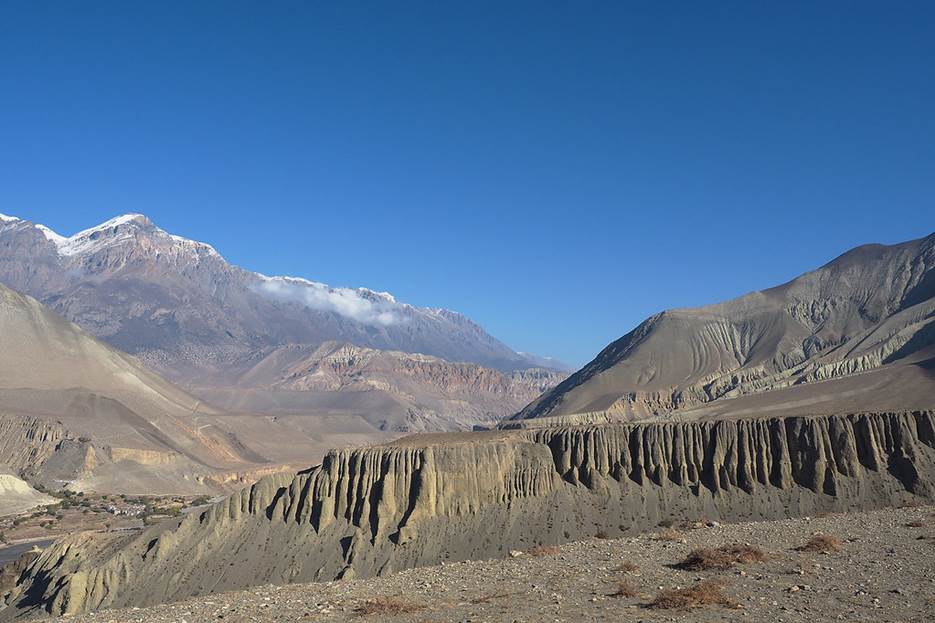
The dry rain shadow area is situated in the Upper Mustang which is located beyond the main Himalayan range. This implies that it is receiving minimal rainfall as compared to the other parts of Nepal. The scenery is flat and deserted, and the valleys are very wide, the plateaus are covered with rocky formations and cliffs created by centuries of wind erosion.
The trees are very sparse and there is hardly any shade. After expanses of deserted land villages are seen. The sky feels vast, and the silence is profound. This is one of the most beautiful features of the Mustang and contributes to the trouble of the ride.
Riders spend the majority of the day in the elements. All those work: sun, wind, dust and cold. The ground is uneven, raw, or rugged and it is not that comfortable. This environment is quite different and even overwhelming at first few days to riders who are accustomed to forest trails or paved mountain roads.
Riding Terrain and Road Conditions
Upper Mustang has mostly a dirt and gravel road. There are other parts that are broad and smooth particularly around villages as compared to some others that are rough and dusty. The surface may shift unexpectedly, which means the rider must stay attentive and maintain control at all times.
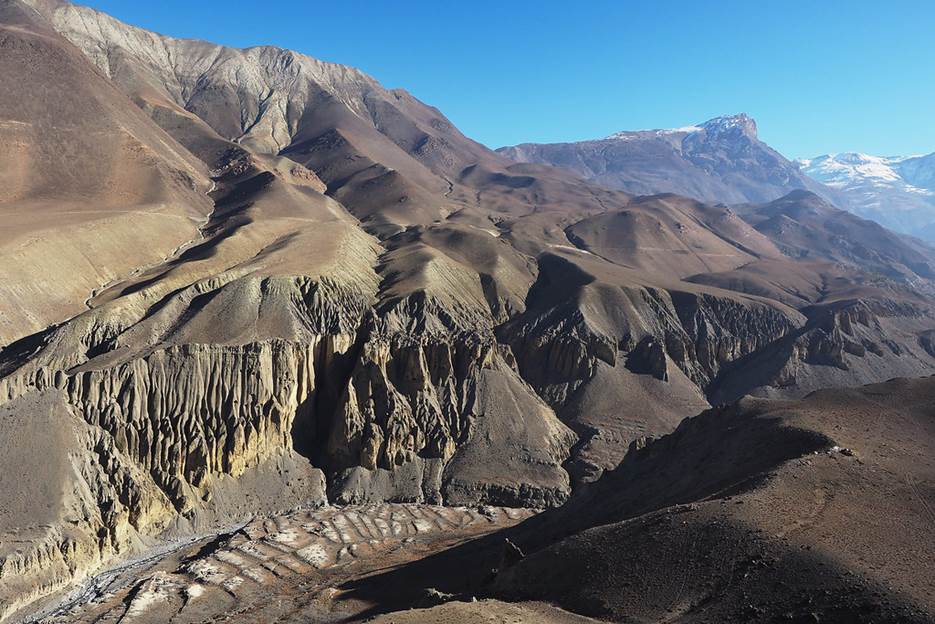
The path usually takes along the dry rivers and open valleys. The road cuts through precipices in one section, and across the base of the valley in another. It does not have any hard technical parts and the continuous change makes the ride tiresome.
The most significant difficulty lies in long-hour balance and control. Gravel can cause loss of grip, and clouds of dust caused by passing vehicles may cause temporary loss of visibility. Riders that remain calm and ride steadily tend to cope with these conditions without challenges.
Challenges that riders face on main roads include:
• Slippery gravel and dusty roads that lessen friction.
• Uneven roads and shallow river crossings.
• Some narrow parts along cliffs.
The challenges can be overcome through patience and controlled riding.
Daily Riding Experience and Physical Effort
The normal day in the Upper Mustang motorbike tour begins early. The majority of riders depart before daylight or soon after. It is cold in the morning, visibility is clear, and the ride is easier. These are the early hours, which are usually the best of the day.
As the sun rises, the land heats up and strong winds begin to blow through the valleys. Riding becomes more physically demanding. Riding in the wind, maintaining the bike and balance on rough roads, and hours of full concentration are slowly wearing down energy.
Daily hours of riding are normally very long although the distances are short. The riders can take between six and seven hours on the bike within one day. Fatigue is experienced by evening. The arms are heavy, the shoulders pained, and the lower back is stiff.
The ride does not feel strained despite the exhaustion. It is possible to take a break, relax, make photos and visit villages. Regular breaks allow riders to better recover and enjoy the ride.
Altitude and Its Effect on Riders
One of the less obvious obstacles of the Upper Mustang motorbike tour is altitude. The road ascends slowly and rises to levels of more than three thousand eight hundred meters, which is close to Lo Manthang. The ascent is gradual, but the body still feels the effects of altitude.
Physical effort seems to be more difficult than normal, and is frequently noticed by the riders. Even such basic things as moving the bike or picking up the luggage use more power. The breathing becomes a little bit heavy, particularly when one is in exertion.
The most frequent changes in altitude include:
• Difficulty breathing when riding or walking.
• Rapid exhaustion as opposed to low altitudes.
• Slower recovery after long riding days.
These effects are not very severe and can be dealt with. Slow riding, consuming water, and proper dieting aid the body to adapt. Bikers who admire the elevation and do not hurry, tend to enjoy the ride.
Weather and Wind Conditions
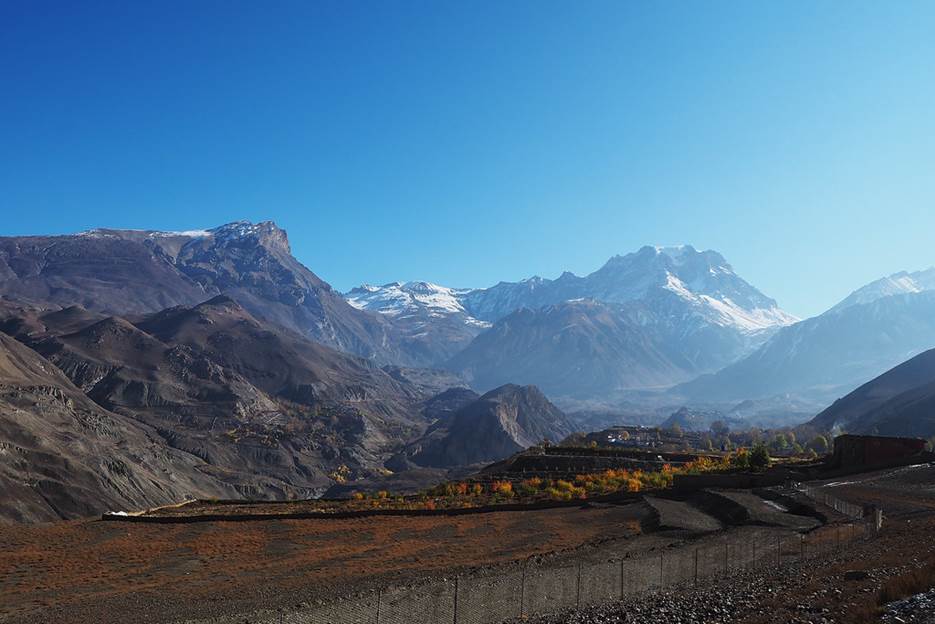
Upper Mustang has a dry climate, which makes it suitable for riding even during months when other regions of Nepal experience heavy rain. However, weather still plays an important role in the difficulty of the ride.
Wind is the biggest weather challenge. Strong winds usually develop after midday and can be intense in open valleys. Riders often feel the bike being pushed sideways, which requires constant correction and focus.
Temperatures change quickly. Mornings and evenings are cold, especially at higher elevations. Midday sun can feel strong, even in cooler months. Dressing in layers is essential for comfort.
There is a lot of dust especially in dry seasons. As the jeeps or other bikes speed by the dust clouds obscure the view slightly and make the inhalation a bit uncomfortable in the moment.
Skill Level Needed for the Tour
The Upper Mustang motorbike tour does not require advanced riding skills, but some basic off road experience is important. Riders should be comfortable riding on dirt and gravel roads for long periods.
Confidence at slow speeds is more useful than speed or power. The route rewards smooth control and patience rather than aggressive riding.
Riders who feel it harder during the tour include:
- Little or no experience in off road riding.
- Attempt to ride at excessive speed to travel.
- Underestimate fatigue and altitude.
When riders remain composed and ride within their capability, most riders find the experience to be manageable and enjoyable.
Practical Advice from Experienced Riders
Experienced riders who have visited the Upper Mustang motorbike tour often give similar tips based on the actual experience. The preparation contributes significantly to the level of difficulty of the journey.
The selection of the motorcycle is valid. Smaller bikes are more maneuverable on loose-terrains and less fatiguing when they have to cover long days. Checking of the bike is necessary in the form of brakes, tires, chain, and suspension before beginning the trip.
Experienced riders recommend common advice that includes:
• Ride light or mid size motorcycle.
• Inspect the bike prior to the ride.
• Be equipped with staple tools and puncture repair kit.
• Ride early and beat afternoon winds.
It is also important in fuel planning. Fuel is readily provided to Jomsom, where after supply becomes restricted. Riders will be expected to think ahead of time and not leave things to chance.
Accommodation, Food, and Recovery
The accommodation of Upper Mustang is easy but adequate to rest. Lodges are simple and traditional and have small rooms and communal facilities. Although there is not much comfort, they offer what riders need the most after they have had a long day.
Food is straightforward, wholesome and comforting. The majority of the food consists of rice, lentils, vegetables, soups, noodles, potatoes, and eggs. Hot tea and soup are particularly warm and cozy in cold and dry climate.
A healthy sleep and hot food are useful to make the body rest. When riders sleep well, they tend to feel a lot better the following morning and can approach the following day of riding with more energy.
Mental Challenge and Mindset
The mental challenge is one of the aspects of the Upper Mustang motorbike tour that many riders are not anticipating. The place is lonely and deserted. Long periods of unused space and quietness may be strange.
This isolation is very relaxing and satisfying to some riders. Others find it difficult particularly in the day of long rides. It is a big difference when a person is mentally prepared to be isolated and progress slowly.
Rather than struggling with the Mustang speed, riding it at its own pace enables the riders to have fun in it.
Final Thoughts
So how hard is the Upper Mustang motorbike tour. It is not extreme, but it is not easy either. It challenges endurance, patience, and awareness rather than technical riding ability.
With realistic expectations, good preparation, and respect for the land, the difficulty becomes manageable. The ride then turns into a meaningful journey rather than a struggle.
Upper Mustang remains remote, quiet, and culturally rich. Riding through it is not about conquering the road, but about understanding the land and moving with it.
